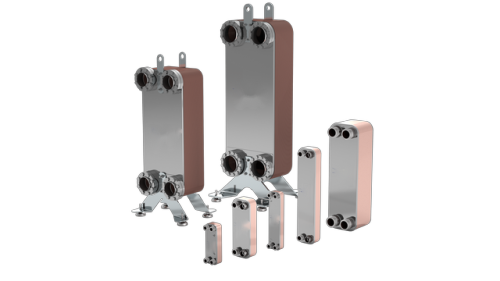
Brazed plate heat exchangers (BPHE) are transforming the landscape of thermal management across various industries. From air conditioning to industrial refrigeration, these compact devices offer a maintenance-free and highly efficient solution for heating, cooling, evaporation, and condensation processes.
Recent Innovations in Brazed Plate Heat Exchanger Technology
The Future of Heat Exchanger Design Trends and Predictions
Advances in Materials Used for Brazed Plate Heat Exchangers
Case Studies Successful Implementations of Brazed Plate Heat Exchangers
In this article, we'll explore recent innovations in BPHE technology, the future of heat exchanger design, advances in materials used, and successful case studies.
Recent Innovations in Brazed Plate Heat Exchanger Technology
The brazed plate heat exchangers have undergone significant technological advancements, making them a popular choice for many industries. One notable innovation is the use of vacuum furnaces during the brazing process, where copper foil melts and flows between narrow gaps, forming a strong bond upon cooling. This method ensures durability and high performance. Additionally, the compact size of BPHEs allows for efficient space utilization and flexible system design. For example, larger installations can be constructed unit by unit via standard doors and elevators, making it easy to expand capacity as demand increases. Furthermore, manufacturers like Acme have optimized BPHEs for specific heat exchange conditions, ensuring excellent thermal performance and reliability. The robust construction of BPHEs eliminates the need for gaskets, reducing the risk of leaks and minimizing maintenance requirements. Their self-cleaning capability, thanks to highly turbulent flows, and the easy Cleaning in Place (CIP) feature, make them ideal for applications with a high risk of fouling or scaling.
The Future of Heat Exchanger Design Trends and Predictions
The future of heat exchanger design is promising, with several trends shaping the industry. One such trend is the increasing demand for energy-efficient and environmentally friendly solutions. BPHEs are well-positioned to meet this demand, as they use about 95% of the material to transfer heat, ensuring efficient use of small temperature differences. This energy efficiency translates to significant savings on energy, maintenance, spare parts, and installation costs over the product's lifecycle. Another trend is the growing importance of customization and rapid production. Manufacturers like Acme achieve this by combining plate design, materials, and connections from standard components, keeping lead times short while maximizing output. This flexibility allows businesses to quickly adapt to changing market demands and technological advancements. Finally, the integration of smart technologies and IoT in heat exchanger design is expected to revolutionize the industry. Smart BPHEs equipped with sensors and data analytics capabilities will enable real-time monitoring, predictive maintenance, and optimization of thermal performance, further enhancing their efficiency and reliability.
Advances in Materials Used for Brazed Plate Heat Exchangers
Materials play a crucial role in the performance and durability of brazed plate heat exchangers. Recent advances in materials science have led to the development of BPHEs that can withstand extreme conditions while maintaining high efficiency. For instance, the use of high-quality stainless steel and copper alloys in BPHEs ensures excellent corrosion resistance and thermal conductivity, making them suitable for various applications, including air conditioning, process chillers, and industrial refrigeration. Additionally, manufacturers are exploring the use of advanced materials like titanium and nickel alloys for specialized applications that require higher resistance to corrosion and temperature extremes. These materials not only enhance the durability of BPHEs but also improve their thermal performance, ensuring long service life even under challenging conditions. The development of eco-friendly materials is another area of focus, as businesses seek to reduce their environmental impact. Sustainable materials used in BPHEs contribute to lower carbon footprints and support environmentally responsible practices, aligning with global efforts to combat climate change.
Case Studies Successful Implementations of Brazed Plate Heat Exchangers
Several industries have successfully implemented brazed plate heat exchangers to improve their thermal management systems. One such example is the air conditioning industry, where BPHEs are used in commercial and industrial cooling systems. The compact size and high efficiency of BPHEs make them an ideal choice for these applications, resulting in significant energy savings and reduced operational costs. In the district heating sector, BPHEs have been employed to enhance the efficiency of centralized heating systems. Their robust construction and self-cleaning capabilities ensure reliable performance and minimal maintenance, leading to cost savings and improved system longevity. For instance, a district heating plant in Europe reported a 20% reduction in energy consumption and a 15% decrease in maintenance costs after switching to BPHEs. The oil and fuel cooling industry has also benefited from the adoption of BPHEs. By replacing traditional shell-and-tube heat exchangers with BPHEs, businesses have achieved better heat transfer efficiency, reduced space requirements, and lower installation costs. A leading oil refinery in Asia implemented BPHEs in its cooling system and experienced a 25% increase in heat transfer efficiency and a 30% reduction in installation time.
Brazed plate heat exchangers are at the forefront of thermal management innovation, offering numerous benefits across various industries. From recent technological advancements to future design trends, BPHEs are poised to play a crucial role in improving energy efficiency, reducing maintenance costs, and supporting environmentally responsible practices. By understanding the potential of BPHEs and staying informed about the latest developments, businesses can make informed decisions and leverage these cutting-edge solutions to stay competitive in the market.
For more information on brazed plate heat exchangers and to explore how they can benefit your business, visit Acme's website and discover their range of high-quality, efficient, and durable BPHEs.
Comments
Post a Comment