Table of contents:
Factors to Consider When Choosing Between Various Drone Detectors
Tailoring Signal Jammer Detectors to Specific Security Needs
Comparing Civilian vs Police Drone Detector Specifications and Capabilities
Budgeting and ROI Considerations for Implementing Drone Detection Systems
Factors to Consider When Choosing Between Various Drone Detectors
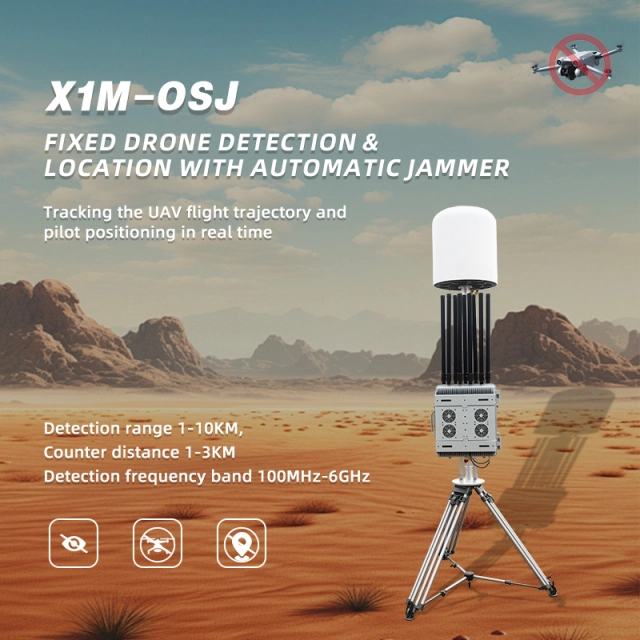
When evaluating drone detectors, several critical factors come into play. Range is paramount, with some advanced systems offering detection capabilities up to 10 kilometers. Accuracy in identifying and tracking multiple drone types simultaneously is equally important. The DJI AUTEL FPV 1-10KM Detector, for instance, boasts impressive range and can identify various mainstream drone models. Frequency coverage is another crucial aspect, with top-tier drone detectors scanning a wide spectrum from 100 MHz to 6 GHz. Additionally, consider the system's ability to pinpoint both the drone and its operator, as this dual-tracking feature significantly enhances response effectiveness.
Tailoring Signal Jammer Detectors to Specific Security Needs
The integration of detection and jamming capabilities in a single system has become increasingly popular. An Automatic Jamming System can provide an immediate response to drone threats without requiring manual intervention. When selecting such a system, it's essential to assess the jamming range and power output. For example, a 550W, 9-band jamming module can effectively disrupt drone communications within a 1-3 km radius. The ability to automatically engage jamming when drones enter a predefined threshold adds an extra layer of security. Furthermore, consider the system's power options and environmental durability, especially for deployments in challenging conditions.
Comparing Civilian vs Police Drone Detector Specifications and Capabilities
Civilian and law enforcement drone detectors often differ in their specifications and legal operating parameters. While civilian systems may focus primarily on detection and alerting, police drone detectors typically incorporate more advanced tracking and potential countermeasure capabilities. Law enforcement-grade drone detectors might offer features like real-time flight path mapping and coordinate displays, which are crucial for evidence gathering and tactical response planning. When selecting a drone detector for police use, it's important to consider systems that comply with relevant regulations and offer the precision required for potential legal proceedings.
Budgeting and ROI Considerations for Implementing Drone Detection Systems
Implementing a comprehensive drone detection system requires careful budgetary planning. While the initial investment in a high-quality drone detector may be significant, the potential return on investment in terms of enhanced security and threat prevention can be substantial. Consider the total cost of ownership, including maintenance, software updates, and potential integration with existing security infrastructure. The versatility of the system should also factor into ROI calculations. A drone detector that can serve multiple purposes, such as perimeter protection and event security, may offer better value. Additionally, evaluate the scalability of the system to ensure it can adapt to evolving drone threats without requiring a complete overhaul.
The landscape of drone detection technology is rapidly evolving, driven by the increasing sophistication of drone threats. Selecting the right drone detector requires a thorough assessment of an organization's specific security needs, operational environment, and budget constraints. From long-range detection capabilities to integrated jamming systems, modern drone detectors offer a range of features to counter unauthorized drone activities. By carefully considering factors such as detection range, accuracy, and response capabilities, security professionals can choose a drone detector that provides robust protection against aerial threats. As drone technology continues to advance, investing in a flexible and upgradable detection system will be key to maintaining effective security measures in an ever-changing technological landscape.
Comments
Post a Comment